Psychic Friction
When your outer self doesn't match your inner one

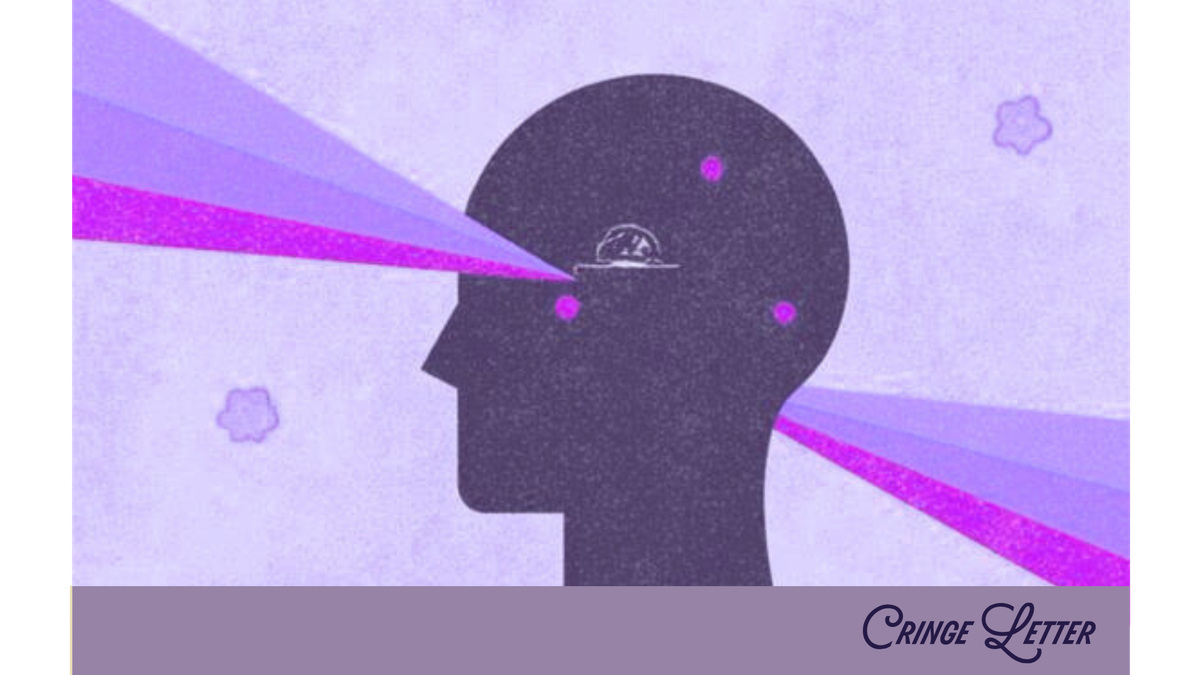
Recently, I came across the concept of “psychic friction,” a state in which one’s external reality clashes with one’s inner desires, values, and identity.
For instance, maybe you have the soul of an artist, but spend your 9-5 as an accountant. Or maybe you love cows, but also cheeseburgers…
Most of us face psychic friction regularly, a tension between what's true and what's easy; what we want and what we need; or what we value and how we act.
These internal conflicts have a ripple effect on our relationships, work, and society.
Because what happens in politics and business is often a projection of our individual issues, desires, and flaws.
This is why we’d all benefit from working on ourselves.
The problem is that when conversations about inner work and mindfulness arise in public conversation, the response tends to be:
“That’s privileged!”
“Who has time for that?!”
“Some of us have to work…”
Working on yourself is often viewed as a luxury, something that requires time and resources no one seems to have.
The benefit of “personal branding” is that it encourages people to view inner work as an aspect of professional development.
The more you know yourself, the clearer (and successful) you’ll be, and the more focused you’ll be in your life and business.
“Personal branding” really comes down to knowing who you are, what you value, how you can help, and how you can project an image that represents this all in a coherent way.
Psychic friction happens when the image you’re projecting starts to clash with your internal world.
And when that happens, you start to become unknown to yourself and others.
In many ways, psychic friction is attached to the concept of masking.
Think of Jim Carrey in The Mask, a timid bank clerk who discovers a literal mask that transforms him into a zany confidence man, causing him to struggle between who he is and who he could be.
We all face this tension in one way or another:
How much do we share?
How much do we show our true nature?
Living with a mask for too long can cause burnout and all types of other mental, physical, and social issues. That’s why knowing yourself and projecting a true image of yourself isn’t just a luxury, but an essential part of creating stability for ourselves and our society.
So, if you’re experiencing a moment of psychic friction, ask yourself:
- Am I playing this role because it reflects who I am? Or am I playing it because it reflects what’s easy, safe, or expected?
- Am I sanding down my edges to the point of my own disappearance?
- Does what I say reflect what I do and how I think?
- Am I forcing a behavior, or does this feel true to how I naturally operate and communicate?