The Digitalized Self
Self-Making and Place-Making in the Digital Era

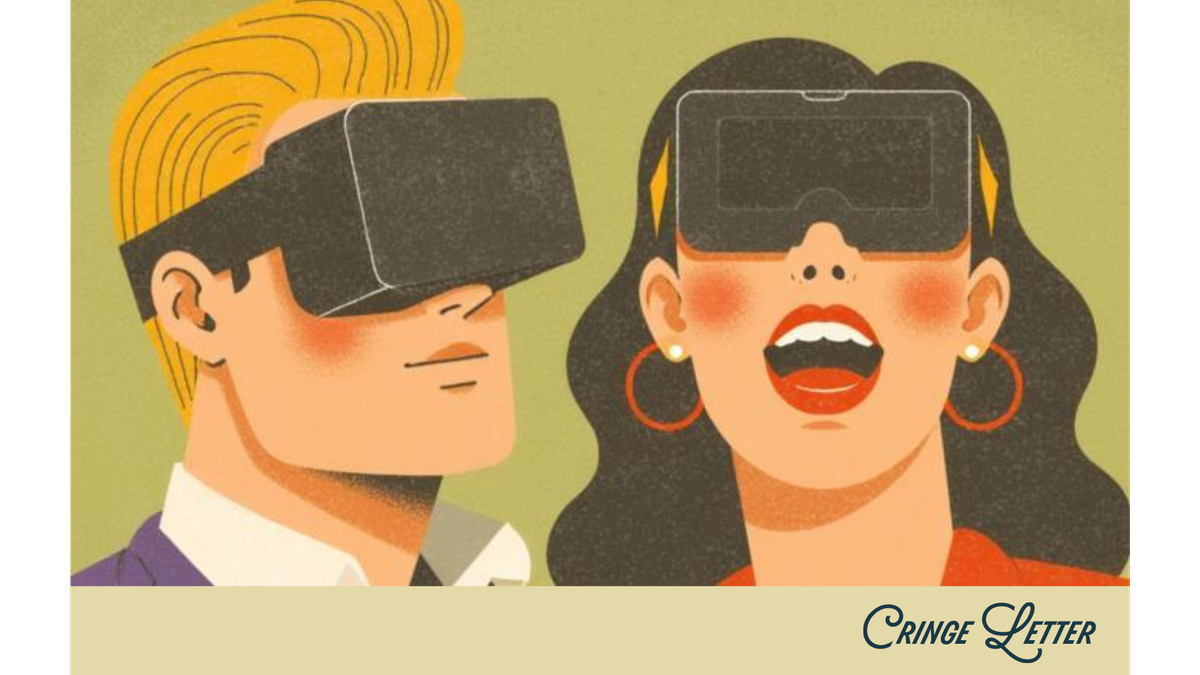
The other night my husband and I had a romantic getaway into a virtual reality therapy space called Innerworld.
We’re not as nerdy as we sound (yes, we are.) And by getaway, I mean I gave up after thirty minutes because I had to update the VR headset a hundred times and forgot every possible password to log in.
By the time I arrived at the intro, with Jewel’s avatar taking me through her mental health journey, I was overheated, motion sick, and tired. Luke went ahead to have a series of “incredibly socially awkward conversations, even more awkward than real life” with other avatars who had made it past the welcome screen.
Awkwardness aside, it’s fun to bop in and out of these digital worlds, trying on different avatars and navigating various digital realms.
You don’t need a VR headset to experience this either. Most of us spend our days hanging out on one social platform or another.
We may even spend more of our waking life online than in the real world, with the average person spending close to seven hours online daily.
As we become increasingly dependent on technology, the line between online and IRL will continue to blur.
In the offline world, we create ourselves by what we wear, how we speak, what we say, who we interact with, and what we do. We are judged accordingly. We can control it to an extent, but we’re limited by things like where we live, what we look like, and our level of access to people and resources.
The same is true of offline communities and spaces. Our access is finite. We are limited by geography and transportation.
Online, rules are different.
We can start as a blank slate and create ourselves to be whomever we want to be (for better or worse). We can hang out anywhere, with anyone, at any time, no matter the distance.
It’s both freeing and overwhelming to think you can create yourself every day and that who you create yourself to be online can have a measurable impact on who you are and what you have access to in your physical reality.
Most of us don’t take advantage of this opportunity enough. We often consume more than we create.
But what would happen if you changed that— if you went from being a consumer to a creator?
Recently, I’ve been interested in the concepts of “place-making” and “self-making,” or digitalized selves.
The idea is we create ourselves and build communities by sharing content. Through the act of creating and getting feedback, we create ourselves. And the space and community we create through that process open up new spaces that didn’t exist before (just look at this beautiful Cringe Letter community).
Unlike journaling or writing in private, sharing publicly provides you with almost instantaneous feedback.
That's why platforms like LinkedIn aren't only powerful tools for marketing your business, but also for self-exploration and growth.
When you “make” yourself in public, you are forced to repeatedly confront your ideas and beliefs, as well as others’ preconceived ideas, biases, etc.
Creating in public can be an enriching and exhausting experience, depending on the day, but it also offers a chance to expand your world in new ways.
Every day is a new opportunity to create yourself. You just have to start.