The Niche is a Prison (And How to Break Out)
I am more than a niche, and you are too.


Are you one of those people who’s hard to define?
Maybe you’ve done a lot, know a lot, and/or have worked across a variety of industries and roles.
If so, you’ve probably struggled with the dreaded niche question: “What is the highly specialized skill that you use to serve a highly specific group of people?”

I CAN’T STAND THIS QUESTION.
And as a regular LinkedIn scroller, I see it all the time, “niche, niche, NICHE!”
I understand where people are coming from. It IS a lot easier to find and hire someone when you know exactly what they do, what they offer, and who they help.
On top of that, the algorithms looove categorization. LinkedIn categorizes and recommends you based on its understanding of your content/keywords.
It’s chomping at the bit to put you in a neat little box before distributing your posts into the feed.
That’s computers, man, they need to know if you’re a 0 or a 1. It wants you to be predictable and taggable.
But what if you just don’t wanna niche, or can’t, or won’t? I feel you 🫠
Here are a few ways I’ve found to get around the “Niche Trap”:
- Find your intersection or overarching theme.
Can you identify any overlaps in your varied experiences? Are you amazing at creating systems? Distilling simplicity from complexity? Or making technical language accessible?
You’d be amazed at the common threads you can start to see when you look back at your work history.
Exercise: Write a list of all the jobs you’ve had, then write a list below that of all the common skills that overlap with three or more of those past roles. Here’s mine. Shout-out to Renee, who sparked this exercise idea with her comment:
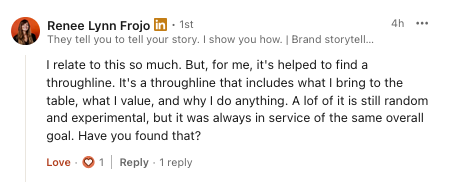
When I reflected on mine, I noticed that a lot of my roles have related to communications, psychology, and translation, mostly translating internal knowledge (i.e., kitchen, company) to the public (i.e., customers)
So, while my work journey might appear all over the place at first glance, it’s actually consistent in terms of the core skills I've used throughout each experience.
2. Lean into your unique voice and visual style. Write for the people, not the algorithm.
Sure, the algorithms love keywords, but people are drawn more to voice/vibes. Always write for people first, because the algorithm also takes into account what people respond to. For instance, if a lot of people follow you (and get notifications when you post), then interact with your post right away, that signals to the algorithm to serve your post to more people. The “algo” and people don’t operate independently.
The more you show up, the more people get to know your voice, the more closely they’ll want to follow along, whether you’re talking about B2B marketing or your trip in a hot air balloon.
Your voice > your niche.
Tip: Be consistent-ish in how you communicate, not in what you say. Use consistent formatting, a signature sign-off, or lens (e.g., comedic) so that the topic becomes secondary to your personality.
3. Use the "Hub and Spoke" Model
Stop relying exclusively on social to get your voice heard. Use a mix of “spokes”/discovery platforms (e.g., social, like LinkedIn) and more owned “hubs,” like your newsletter or blog, to delve deeper into your intersectional expertise.
Tip: Tease a specific idea on social, then direct people to engage more in-depth via your newsletter. That way, you’ll get exposure to a broad audience and start to build an owned list that lives outside the algorithm.
Speaking of Hubs, you might have noticed I've moved this hub, Cringe Letter, from Substack to Ghost, so if things look a bit different that's why.
I made the change so I can have more ownership over my content and start building a library of work/improve SEO for isabelsterne.com.
You can now find past issues of Cringe Letter hosted on my site. Hope you like the update!
Until next time,